West Spanish Peak—the United States’s easternmost 4,000-meter peak—enjoys prominence in elevation and notoriety in history. Standing at an imposing 13,626 feet, the mountain’s apex may not rise as high as many of the other peaks in Colorado, but still takes the rank as the state’s twelfth-most topographically prominent summit.

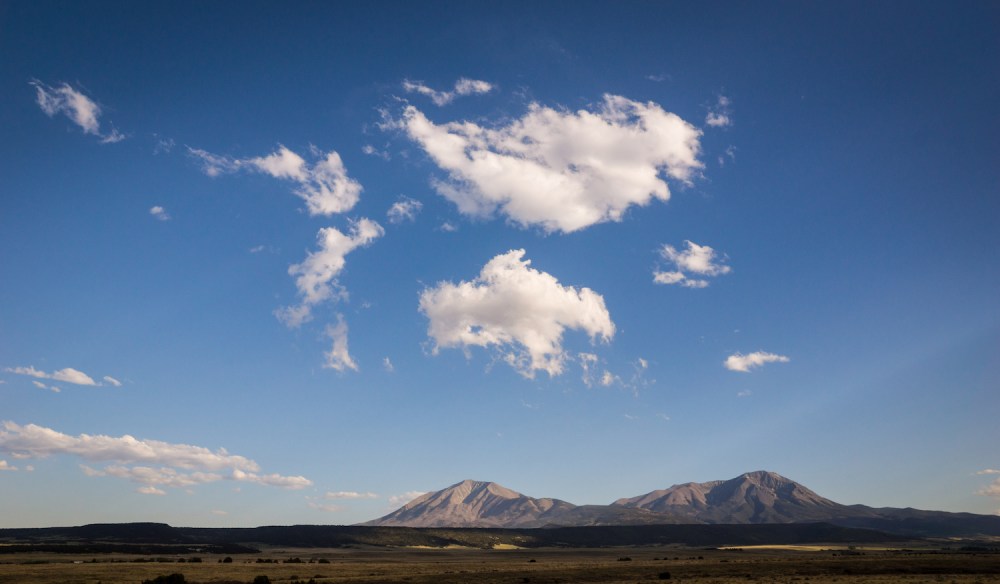
Rising nearly 7,000′ over its north and south flanks, the impressive mountain commands attention from hundreds of miles away. West Spanish Peak and its sister summit East Spanish Peak were together labeled the Huajatolla (pronounced wa-ha-toy-ah) by the Ute Native Americans; translating roughly to “breasts of the earth”. The moniker is borne of the pair’s bosom-like visage, apparent from various vantages, one of which I have included a photo of at the end of the post. These mountains were important to both the Ute and Comanche Native Americans, who took the summer thunderstorms that prodded their summits as a spectacle of the rain god’s vigor.
For my trip, the rain gods appeared to be occupied elsewhere, and with favorable weather in the day’s forecast, I did not feel my usual alpine-obligation to leave for the trailhead before dawn. I arrived at the foot of the mountain’s southwest ridge, where the easily accessible Cordova Pass trailhead awaited the start of my adventure. It was this southwest ridge that I would be ascending, and from the trailhead, the peak’s apogee rose nearly 3,000′ overhead.

Shortly after starting up the trail, one can find a plaque on a rock that designates the Spanish Peaks as a national landmark.
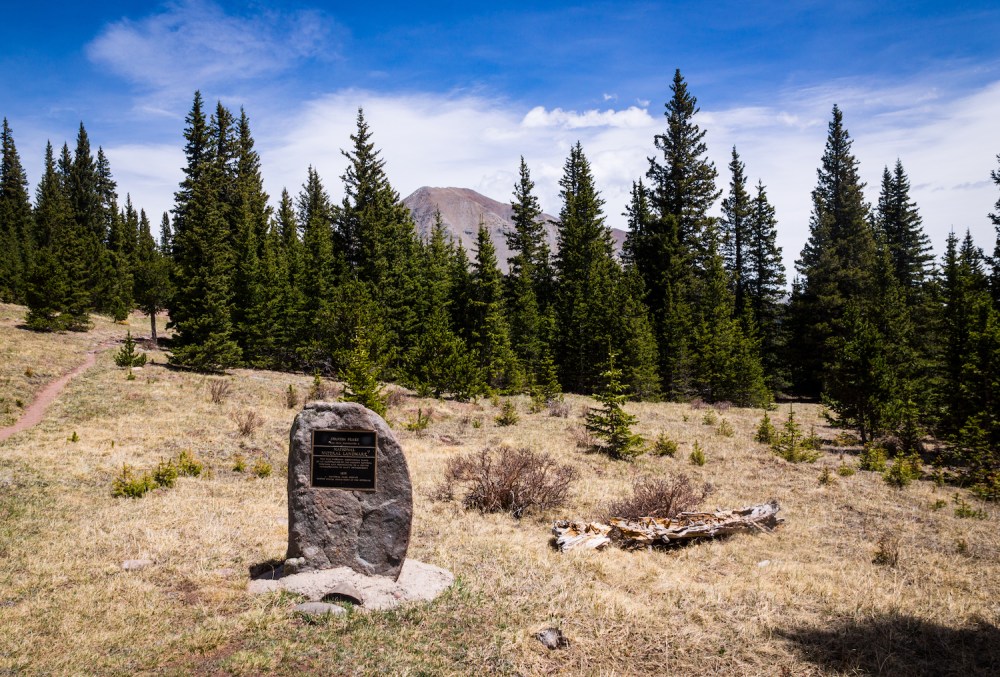
To highlight the area’s significance, the Forest Service designates nearly 20,000 acres of land in the mountain’s proximity as one of Colorado’s forty-one wilderness areas.

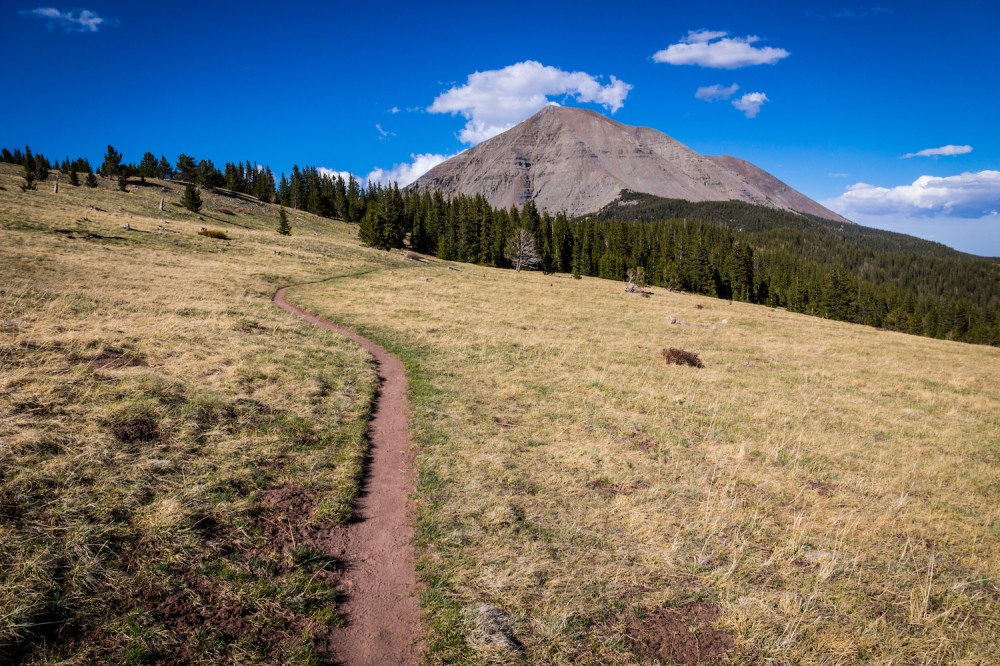
Beyond the plaque, I passed through a pine grove to reach a large clearing with an excellent vista of the challenges ahead.
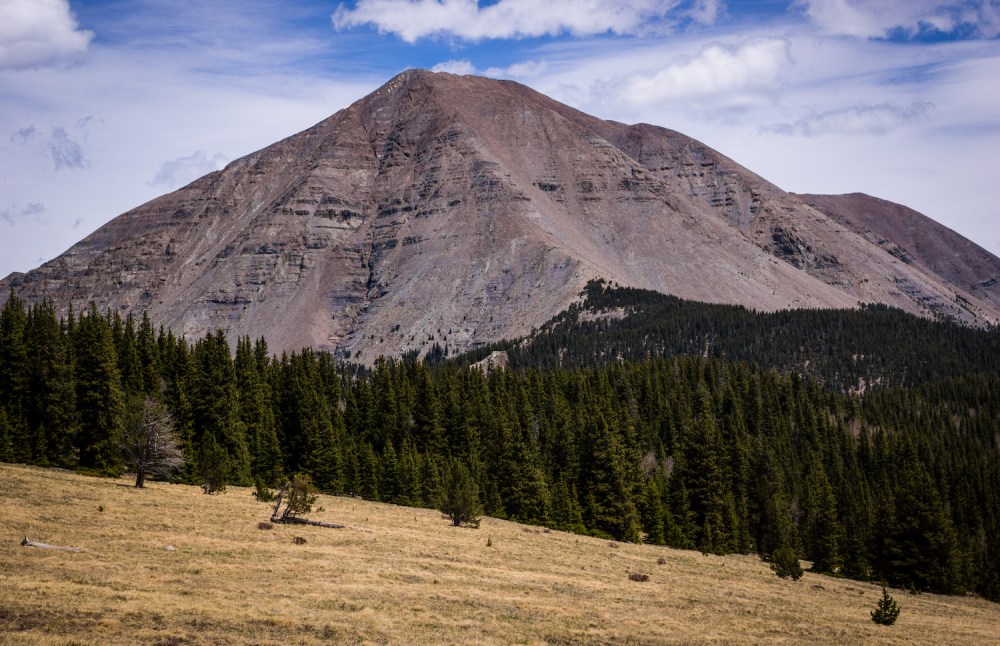
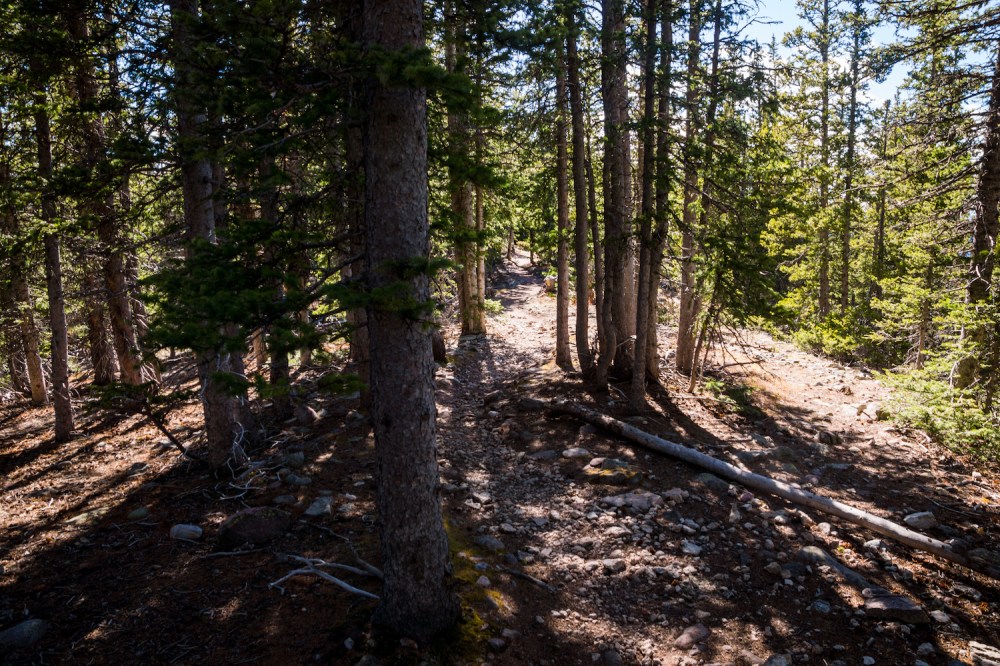
I passed through the clearing and began working my way up switchbacks to find timberline. I bounded through the trees, occasionally catching glimpses of the Sangre de Cristo range to the north and the Culebra range to the west.

In the sea of cliché green pine trees, I found variety in the few gnarled Bristlecone Pines, whose dead branches barbed their surroundings.


The presence of a trail tapered off as I reached timberline, where I traded the path for cairns that guide one’s ascent up the ridge.
A jumble of scree and talus enveloped the ridge ahead. The cairns would have followers slip and slide on the scree that covered the way up climber’s left, but I found the larger talus on the ridge proper provided a less trying ascent.
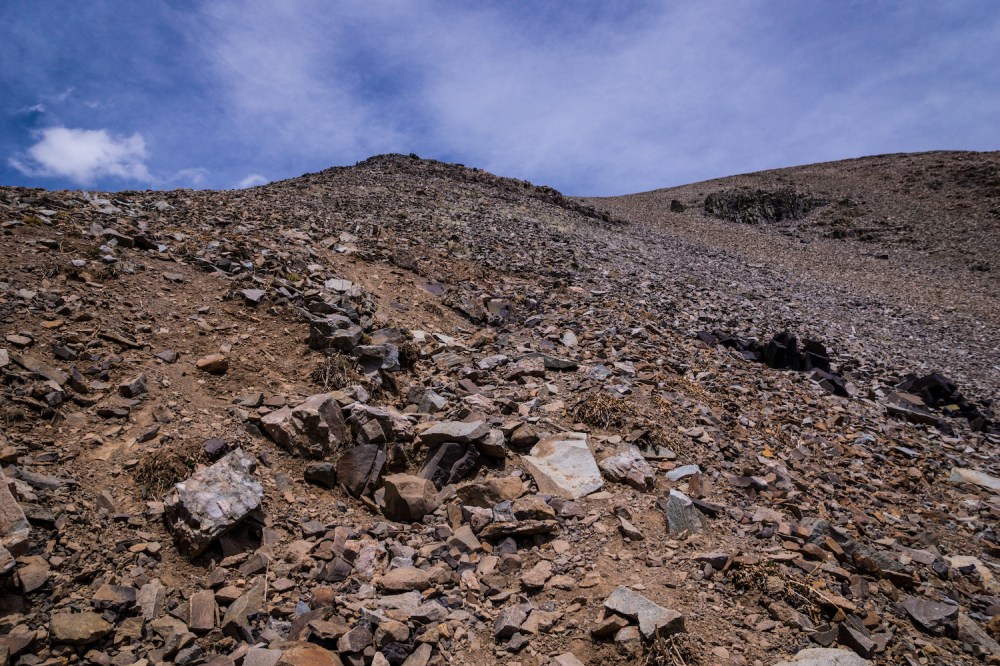
Elevation gain became abrupt, and with this trek being my first alpine summit since last year, the familiar muttering of profanities under my labored breath reminded me of the fun that accompanied the challenge. Approximately one thousand four-letter words later (is that not a good gauge for the passage of time?), I reached a mini-saddle that marked the commencement of the more gently graded summit plateau.

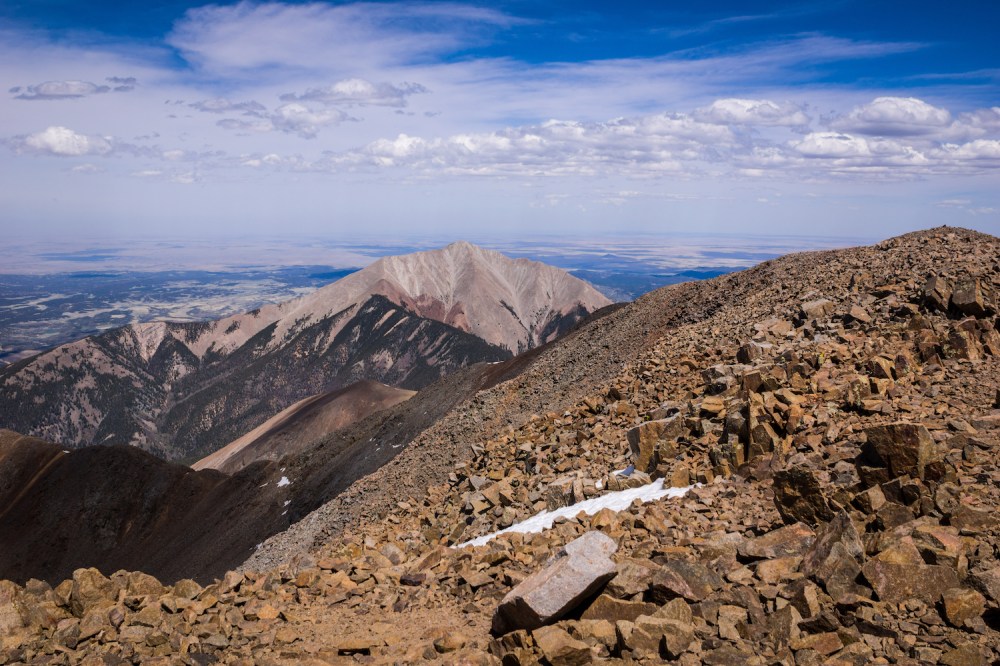
I trudged through some residual soft snow, and with a bit of effort, topped out on the figurative nipple of the climb. The views sprawled in all directions.

Enormous dikes (it’s geology, beloved readers!) lined the landscape below. Being my southernmost Colorado summit to date, the landscape of familiar Sangre de Cristo summits to the north now appeared foreign and magnificent.

Blanca Peak’s telltale topography helped me identify the surrounding mountains. The Culebra range rose above my route of ascent, not too far west.

I soaked in the views, scarfed down an orange, and captured the scenery— all with July-like temperatures at the summit.
Greatly satisfied with my first alpine endeavor of the year, the promise of a warm meal began to pull my mind back to home. I gathered my belongings, and began the tiresome, loose descent. Returning to timberline, I gladly welcomed the shade the trees offered and the solid trail underfoot.
My mealtime tunnel vision narrowing, the descent became a blur of switchbacks and trees. Once again reaching the large clearing from near the beginning of the day, I smiled and bid the mountain adieu.
Back on the road, en route to the highway, it felt as though the peak—at this angle, now joined by its sister summit and basking in muted evening light—whispered its own farewell back.

Until next time, my friends, stay adventurous!

 The Overcast Adventurers