The day was young and I was less than a mile into my hike… but something was amiss. I had embarked on a hike in the Eagles Nest Wilderness and thought a perfect morning had been assured. The uphill was gentle but each step forward became more painful than the last. In the tunnel vision of my excitement for the adventure I had transgressed a rudimentary tenet of hiking: I hadn’t broken in my new hiking boots.

The backs of the shoes were ripping my heels to shreds. I had moleskin and gel-based blister pads in tow but it didn’t matter. Any protection or padding I tried placing between the shoes and my feet would be scraped off within a few paces. My footwear was out for blood. I pushed onward for a time but didn’t make it much further. The day was a bust and I hobbled back to my car nearly on the verge of tears. It took over a week until I could walk normally again.
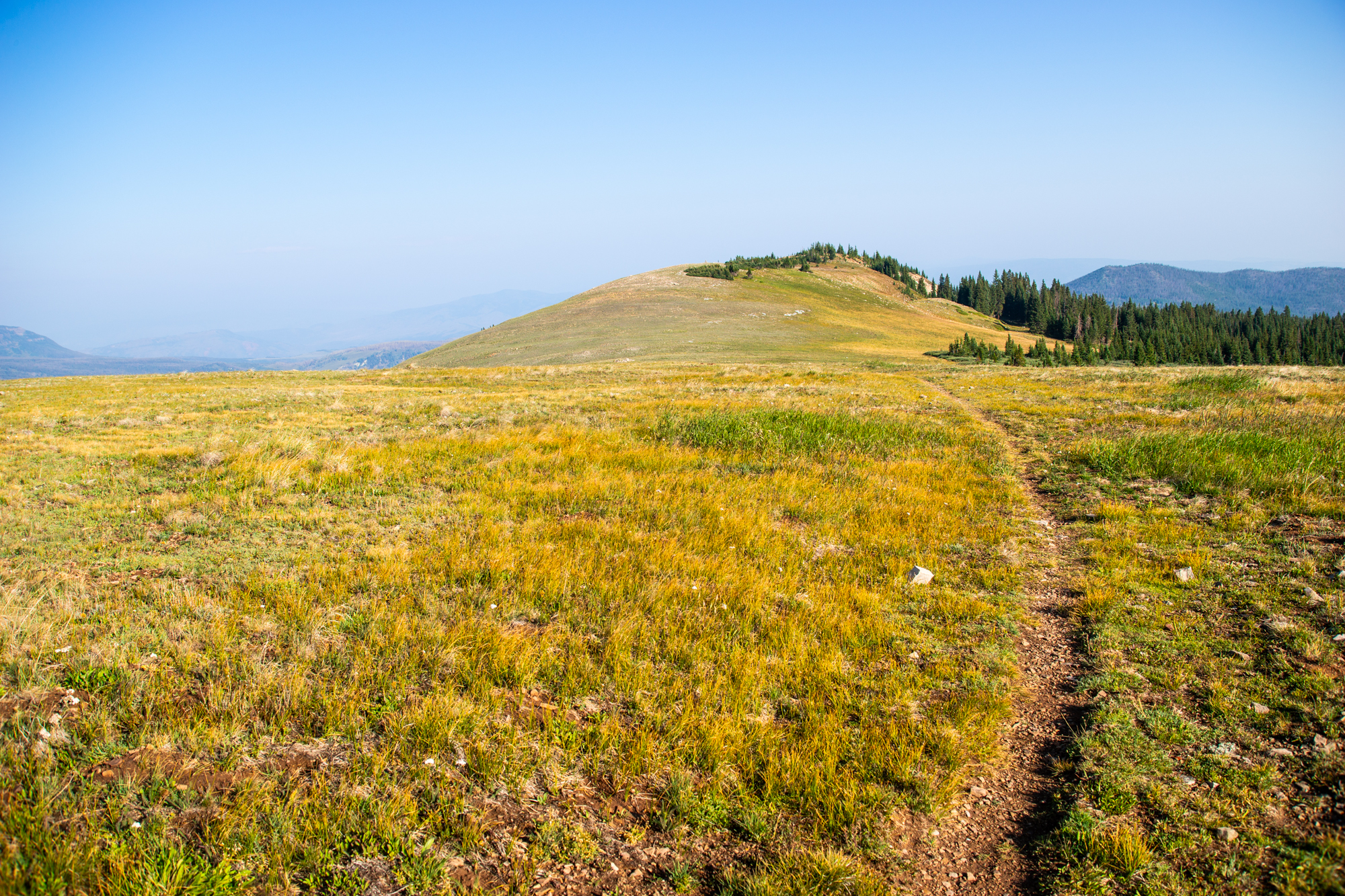
This ill-fated jaunt was back in August of 2021 and was my first attempt to hike the Elliott Ridge Trail. The route leads hikers up the remarkably broad crest of Elliott Ridge and gradually leads to the summit of Meridian Peak (12,413′). Eagles Nest Wilderness is home to the Gore Range; a subsect of the Colorado Rocky Mountains that is renowned for its jagged and intimidating topography. Elliott Ridge and Meridian Peak serve as a gentle backdrop to those intimidating summits. My objective for the first disastrous outing was just to explore the ridge. I returned a month later, feet healed and shoes properly broken in, aiming then to reach the summit of Meridian Peak at sunset to capture evening alpenglow on the Gore Mountains.

I didn’t get the timing right—having returned with some cool photos—but not a complete blog-worthy narrative.
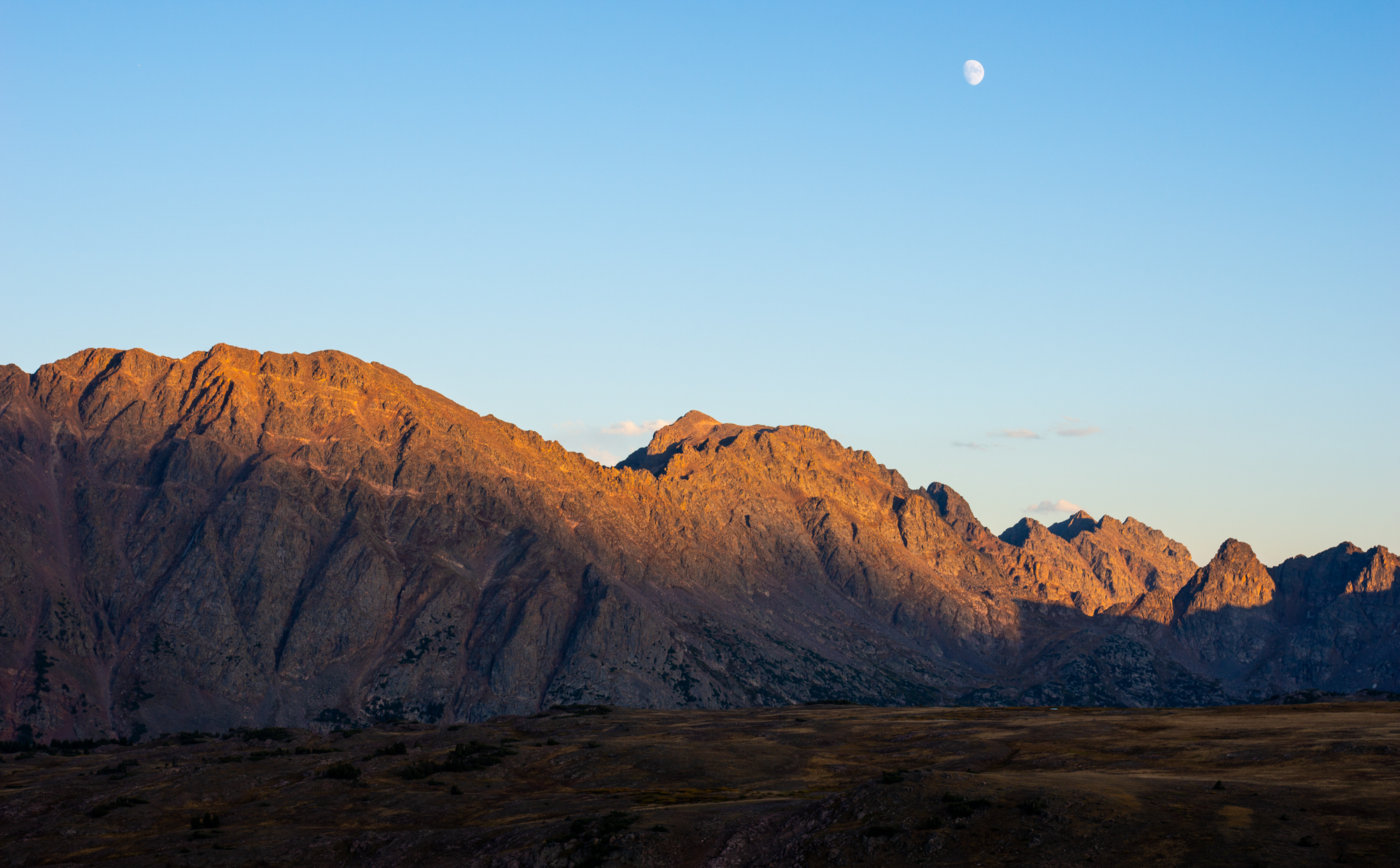
A week ago I returned once more, opting to split the difference and endeavoring to reach the summit of Meridian Peak at no particular time of day.
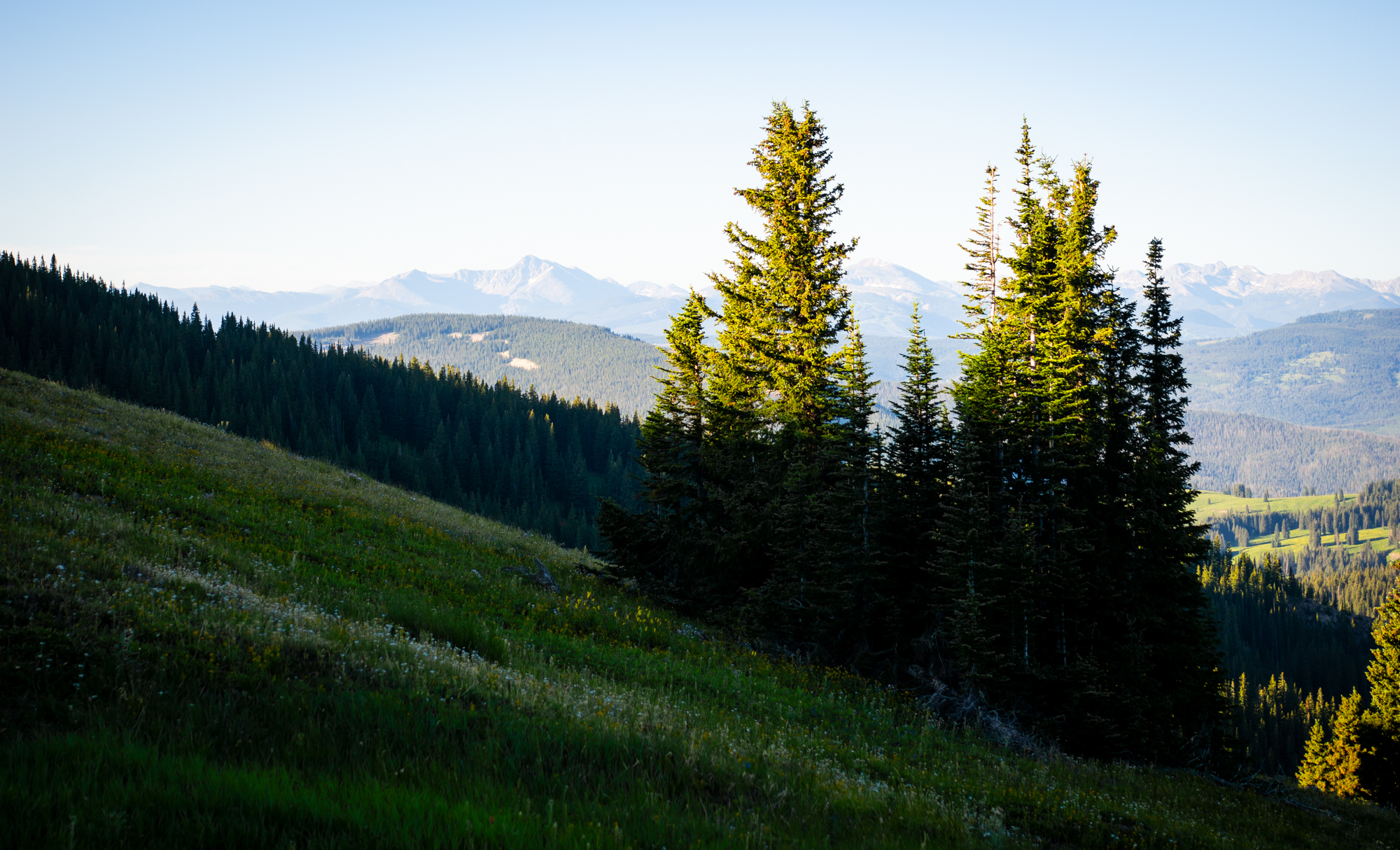
Golden morning sunlight washed atop the branches of the pines above as I started my trek.

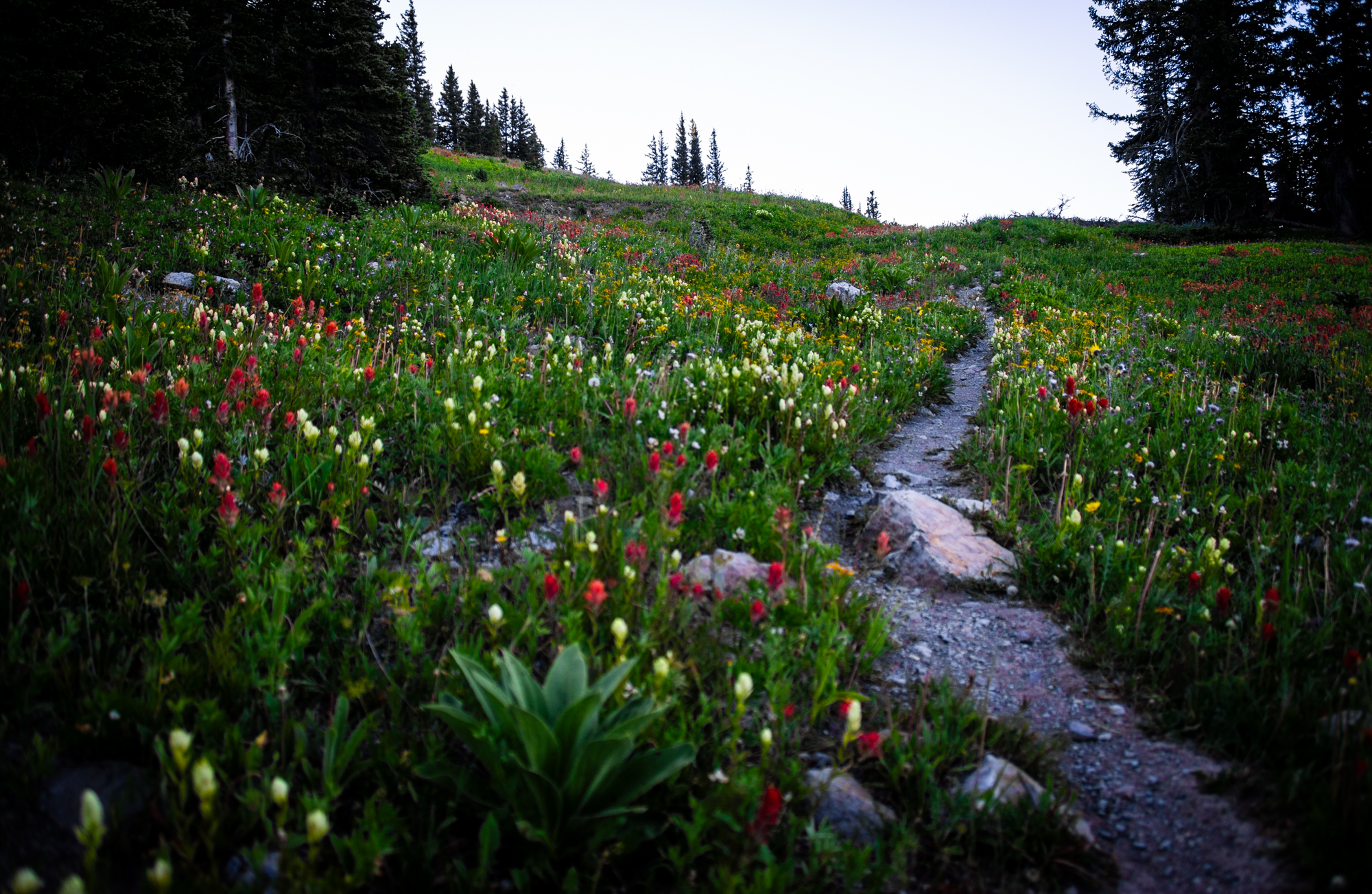
A glorious spectacle was unfolding beneath; a passel of vibrant wildflowers ornamented the verdant grasses around the trail.


One unique characteristic of this hike is that it starts near timberline. Panoramic views of prominent Colorado mountains are offered practically from the get-go. A wildfire-induced haze weighed heavy in the air and sadly diminished the vistas somewhat, but the distinct contours of Mt. of the Holy Cross—its summit 26 miles to the south—were still immediately apparent.
The incline of the trail was gentle but consistent. Trees became scarcer as the air got thinner and I passed through a final stand of pines nearly a mile in.

I continued through the alpine meadows and approached the formal boundary of Eagles Nest Wilderness.
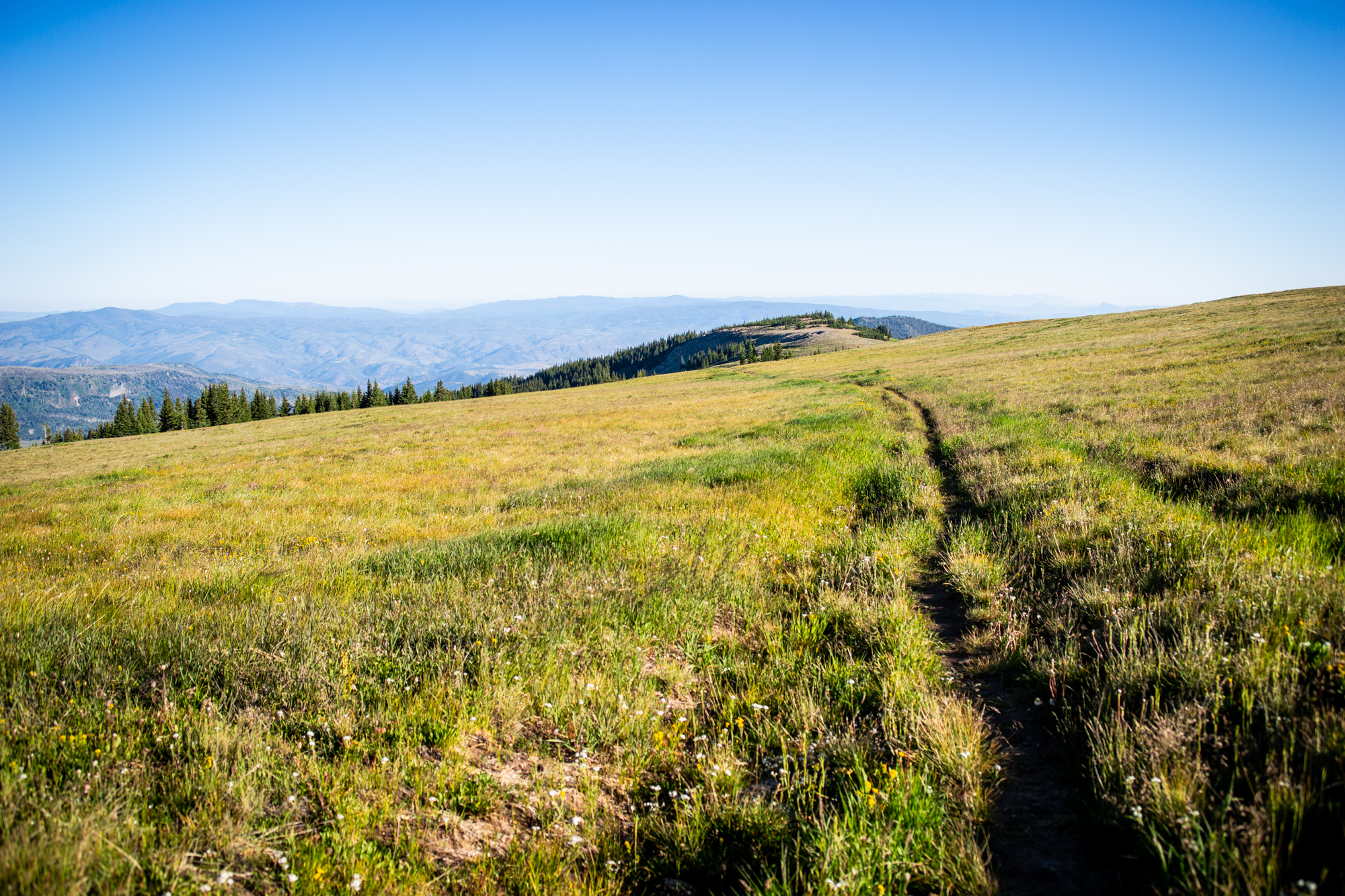

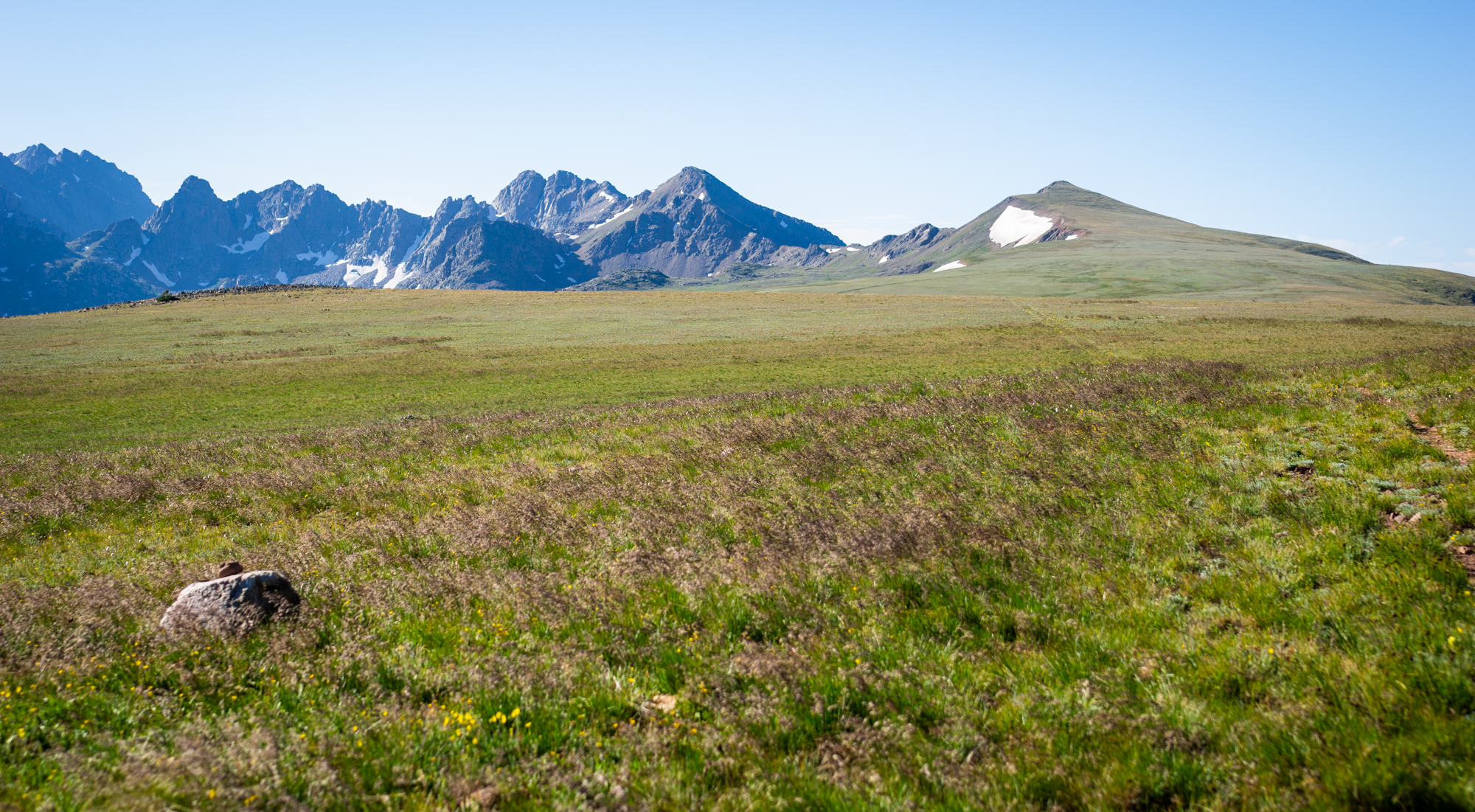
It’s here that adventurers are afforded an unparalleled view of the daunting Gore Mountains to the east.
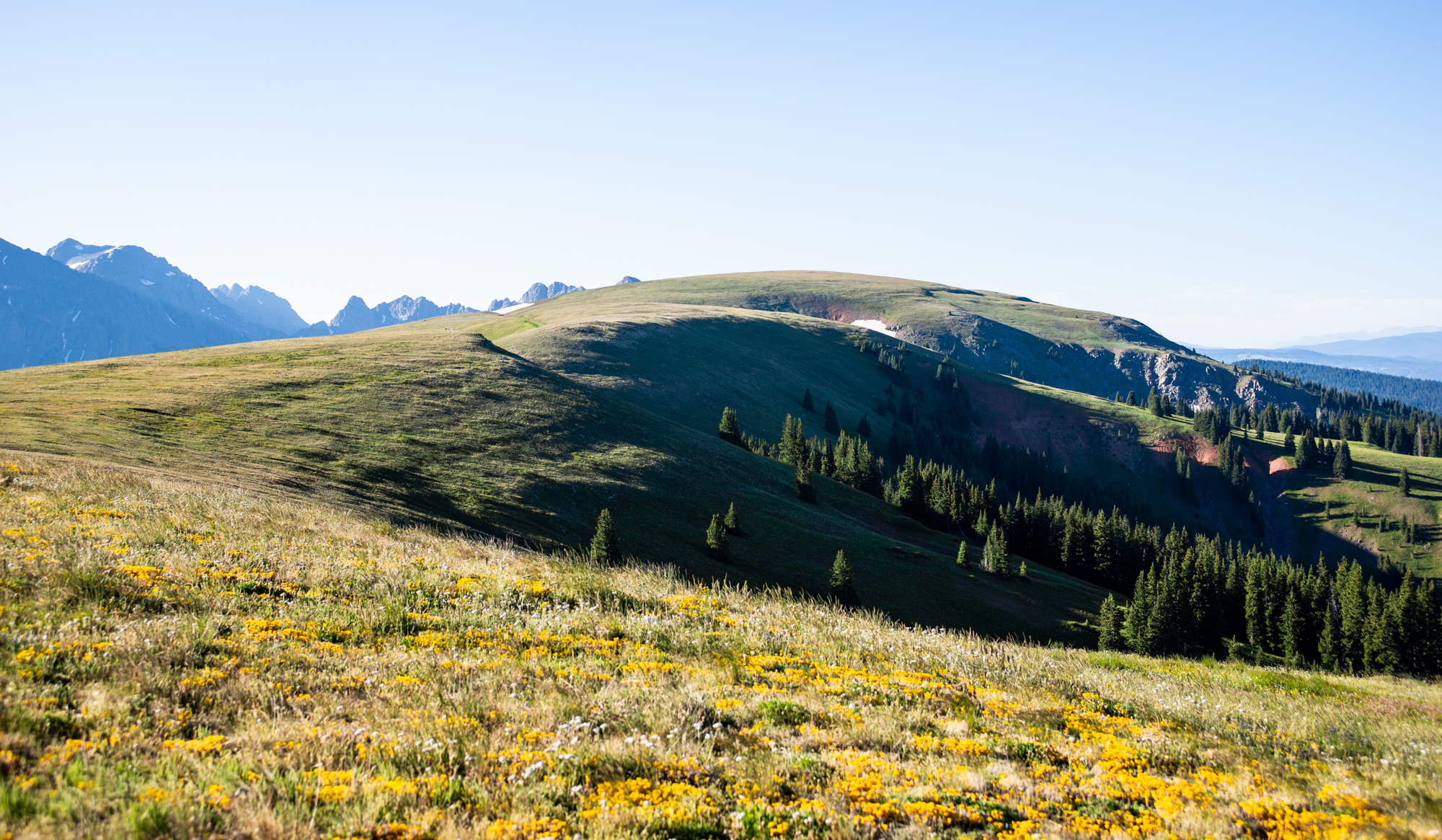
The pinnacle of the Gore range is Mt. Powell and its summit rose sharply more than a thousand feet overhead.

The consistent uphill relented as the terrain along the ridge began gradually undulating upward for the following two miles. Blustery winds began to pick up and may have helped to quell the surrounding haze some.
Just over three-and-a-half miles in the trail begins angling downward to a saddle of sorts. Travelers descend for almost a mile and ultimately lose about 250′ of elevation. It was here that I bailed on my previous sunset attempt of Meridian Peak. The scenery moving forward was new and refreshing. The remainder of the way to the summit of Meridian would be entirely uphill.
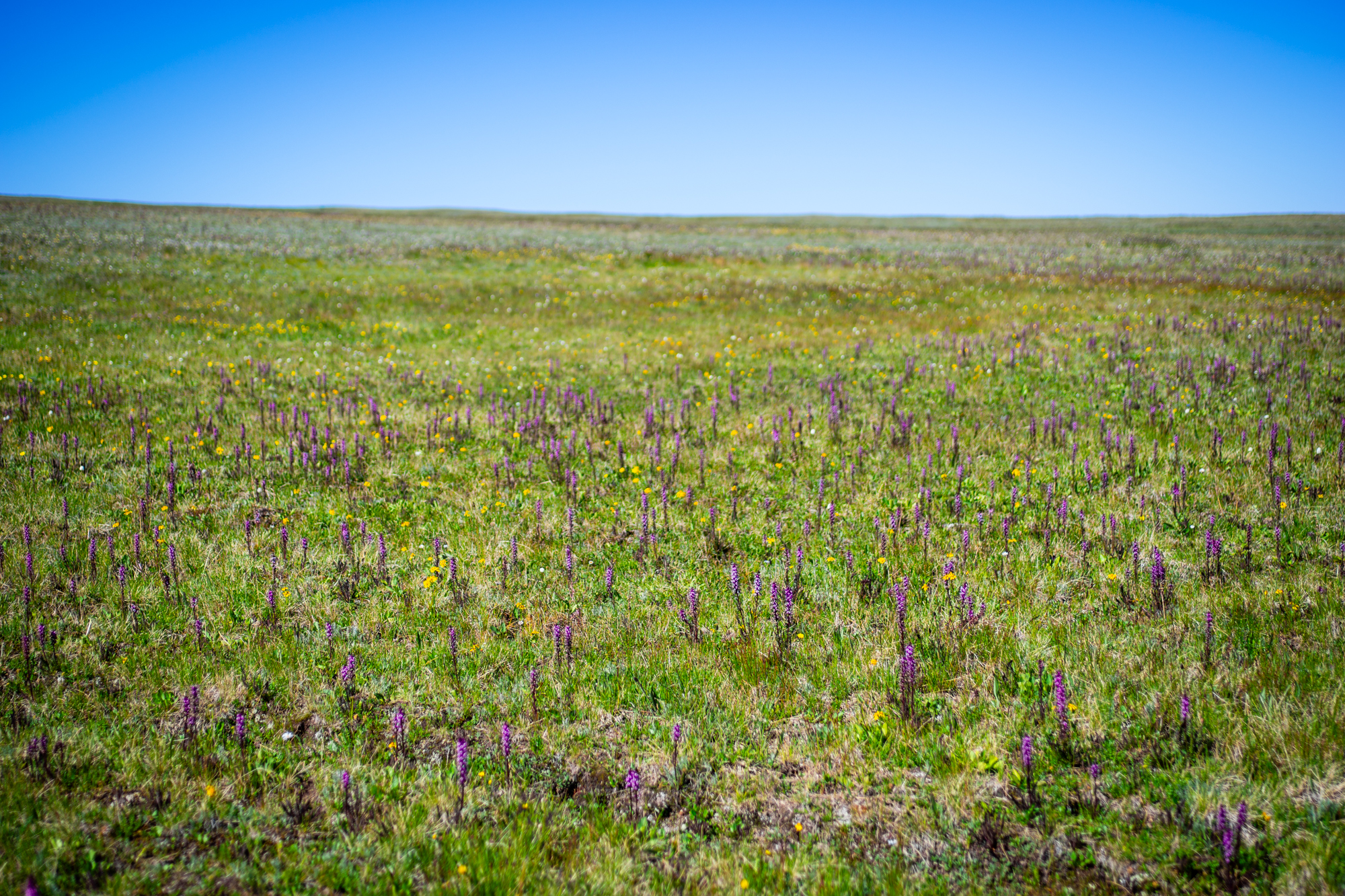
I reached a trail junction just past five miles in that provides access to the wilderness’s Soda Lakes to the west and Cataract Creek to the east. The end was admittedly a bit of a slog, but after another mile of steady incline, I finally reached the summit of Meridian Peak.
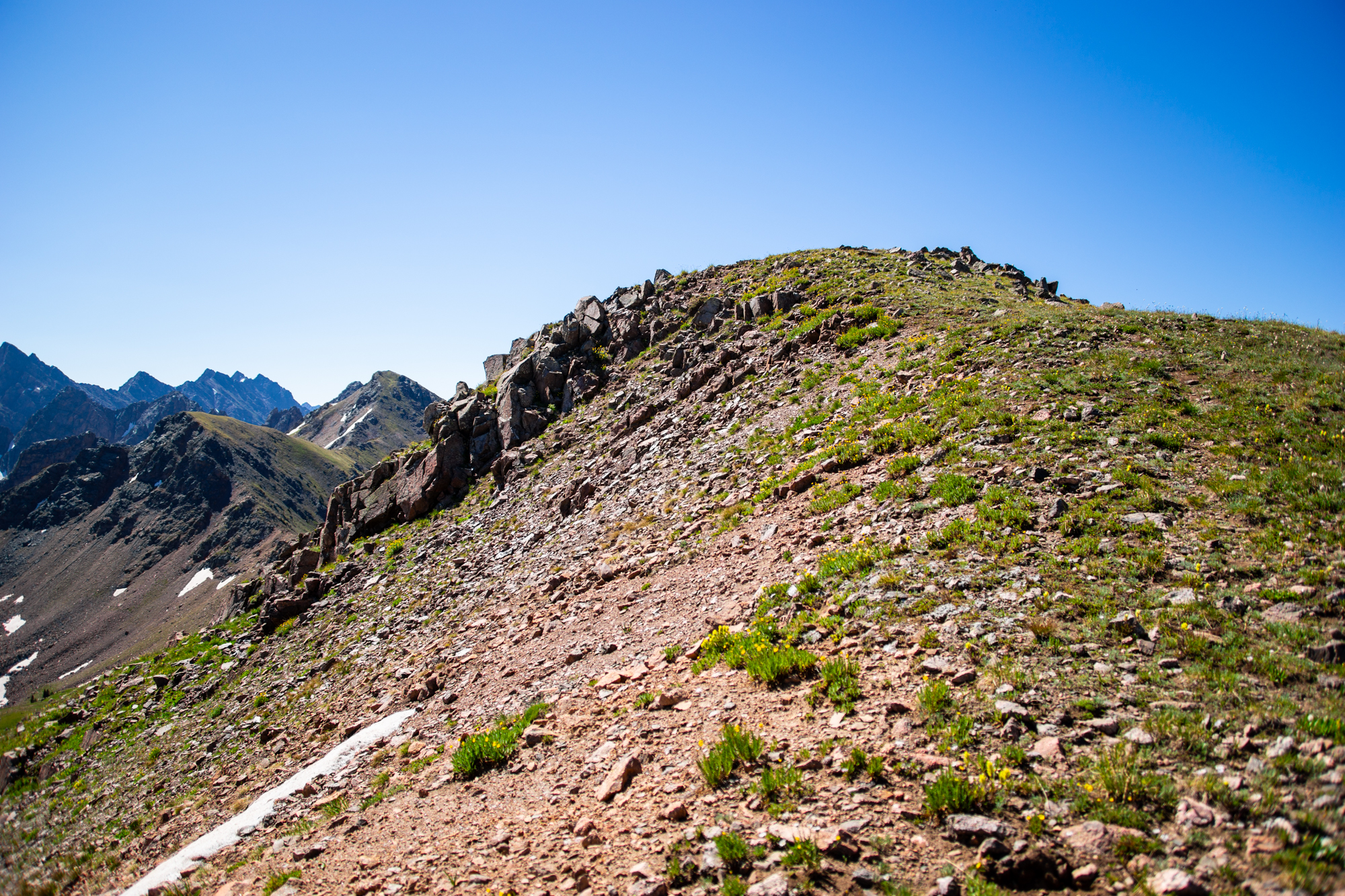
I rested, took in the scenery, and enjoyed the company of two golden-mantled ground squirrels.
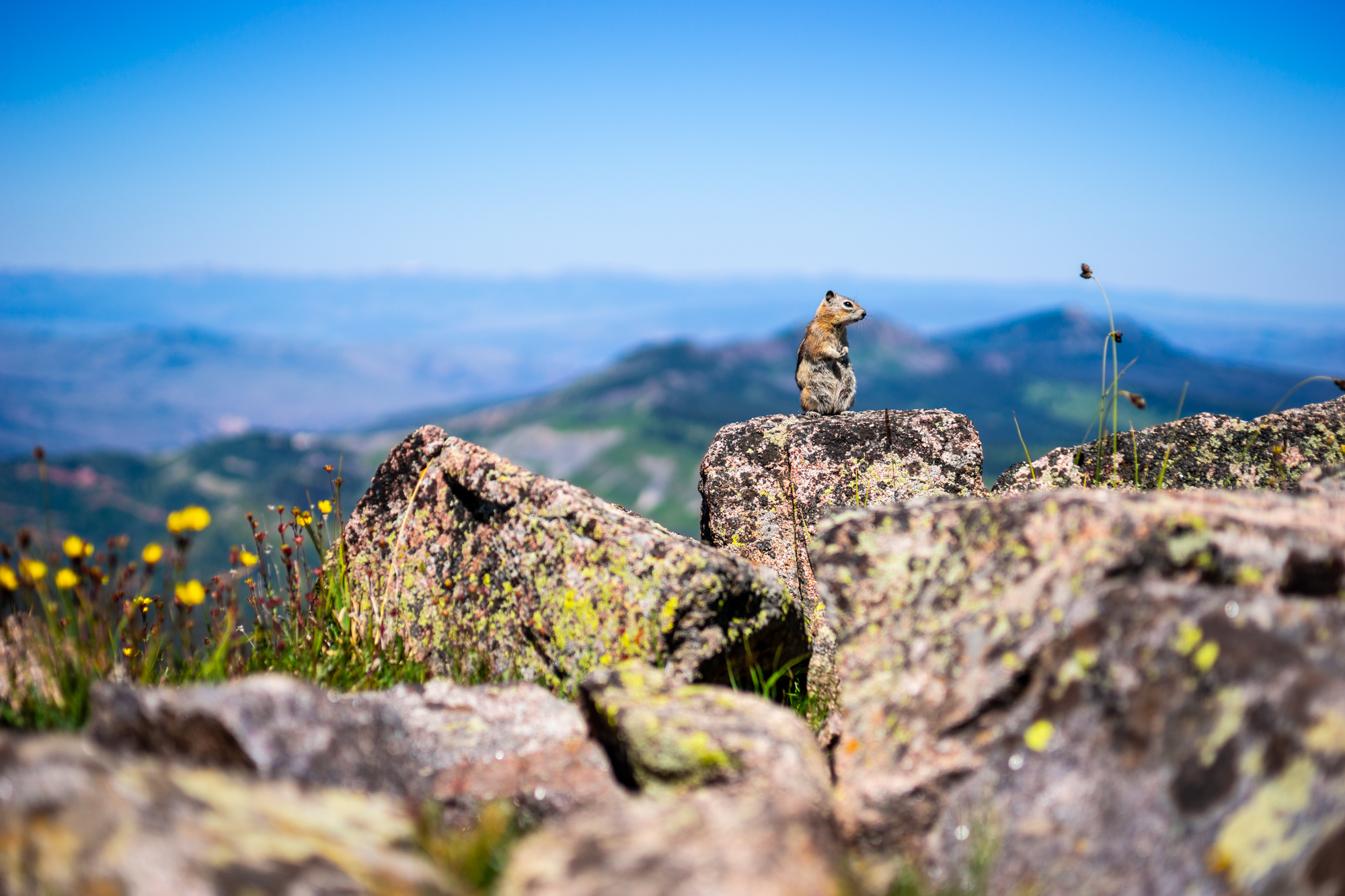
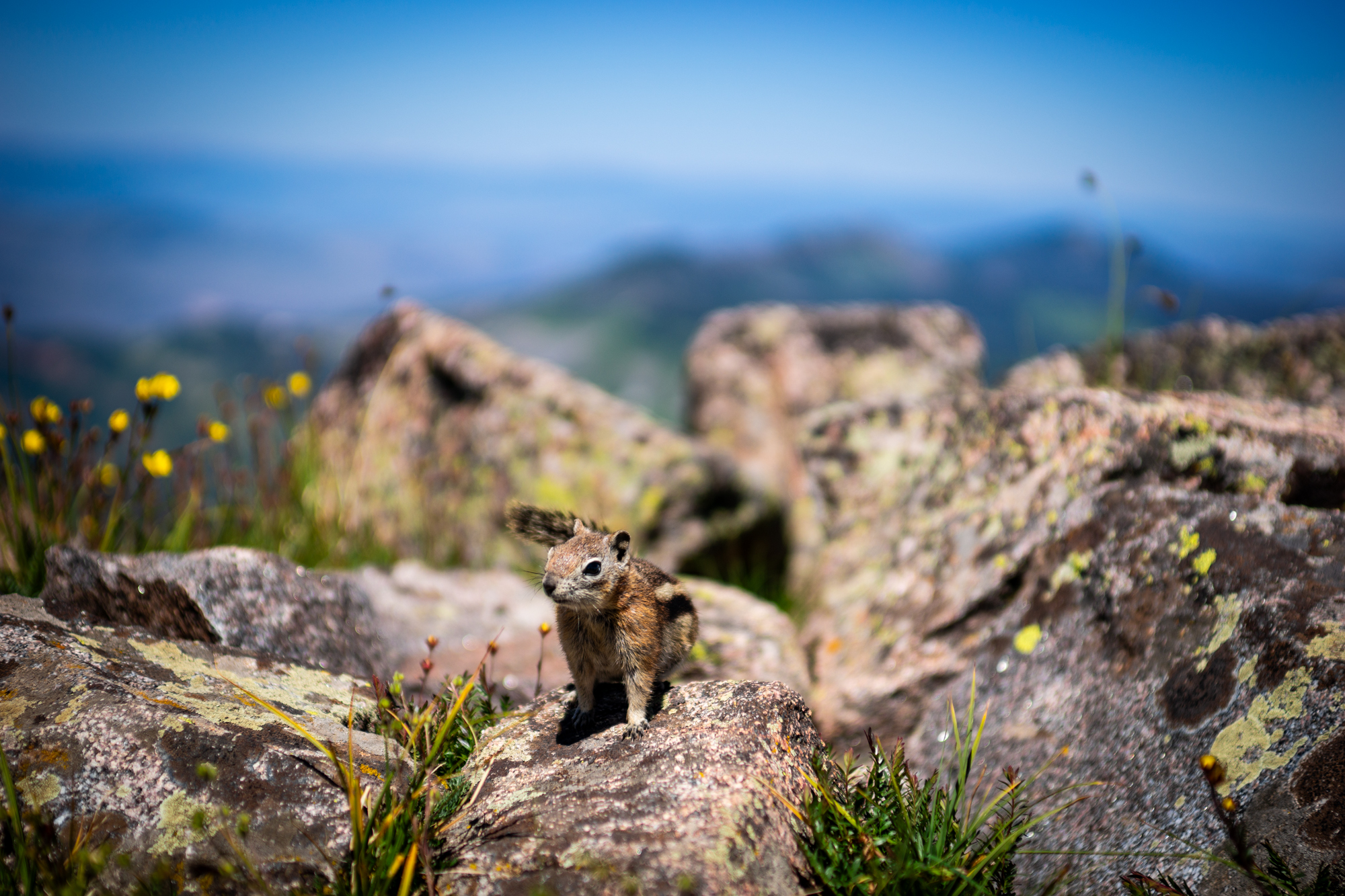
Through the haze, I could make out the distinct shapes of Capitol Peak and Snowmass Mountain about sixty miles to the southwest. I stayed on the summit for a little over an hour to see how the light would change on the Gore Mountains.

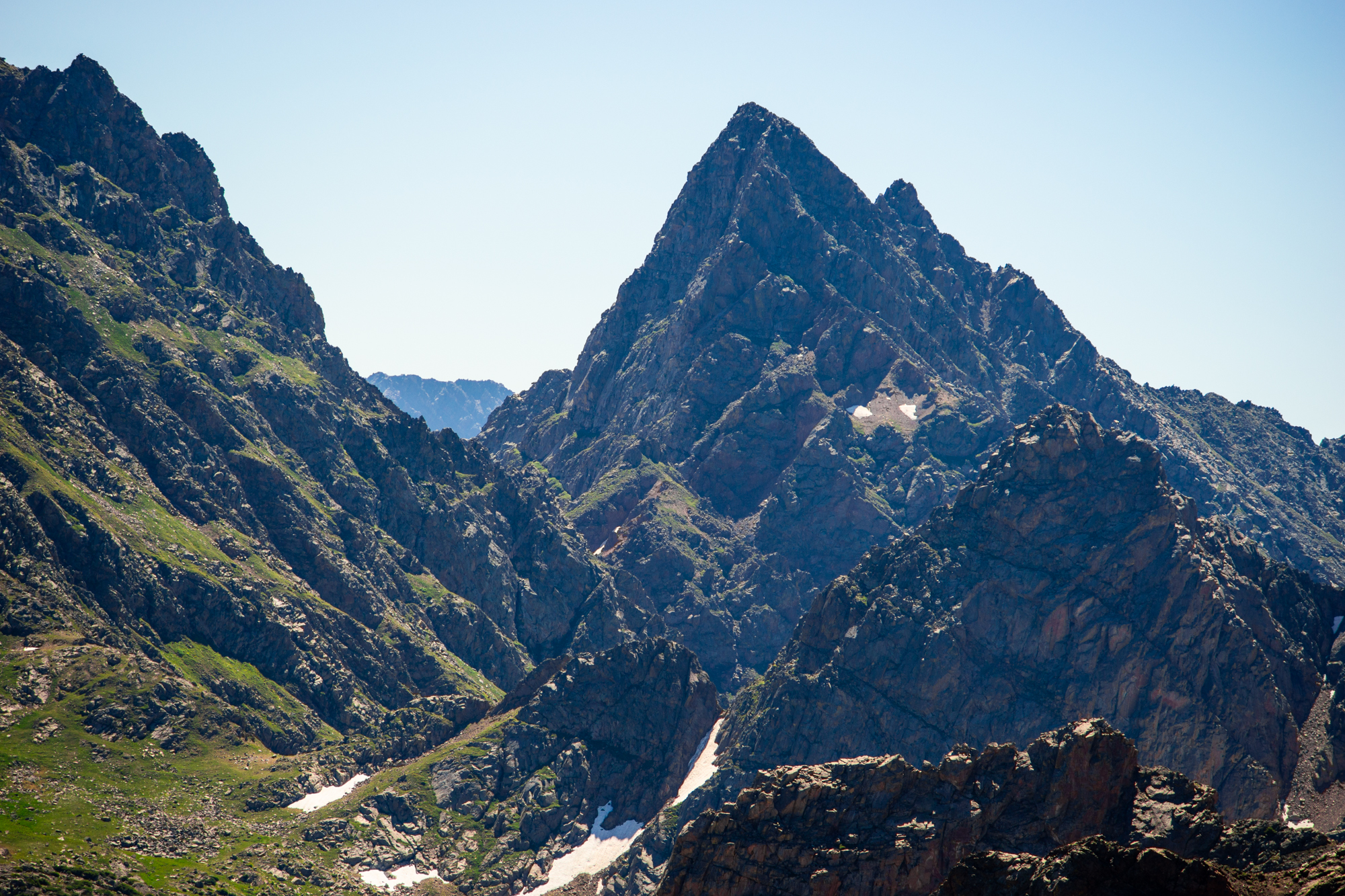
The pyramidal summit pictured above is called Peak C (13,228′).

Dozens of shutter clicks later I’d had my fill; I gathered my belongings and started my descent. For reference, in the picture below, Eagles Nest (13,419′) is the leftmost prominent summit and Mt. Powell (13,586′) is connected via the ridge to its right.


Near the Soda Lakes/Cataract Creek trail junction I made a small detour to a series of unnamed ponds that I had noticed from Meridian Peak’s summit.
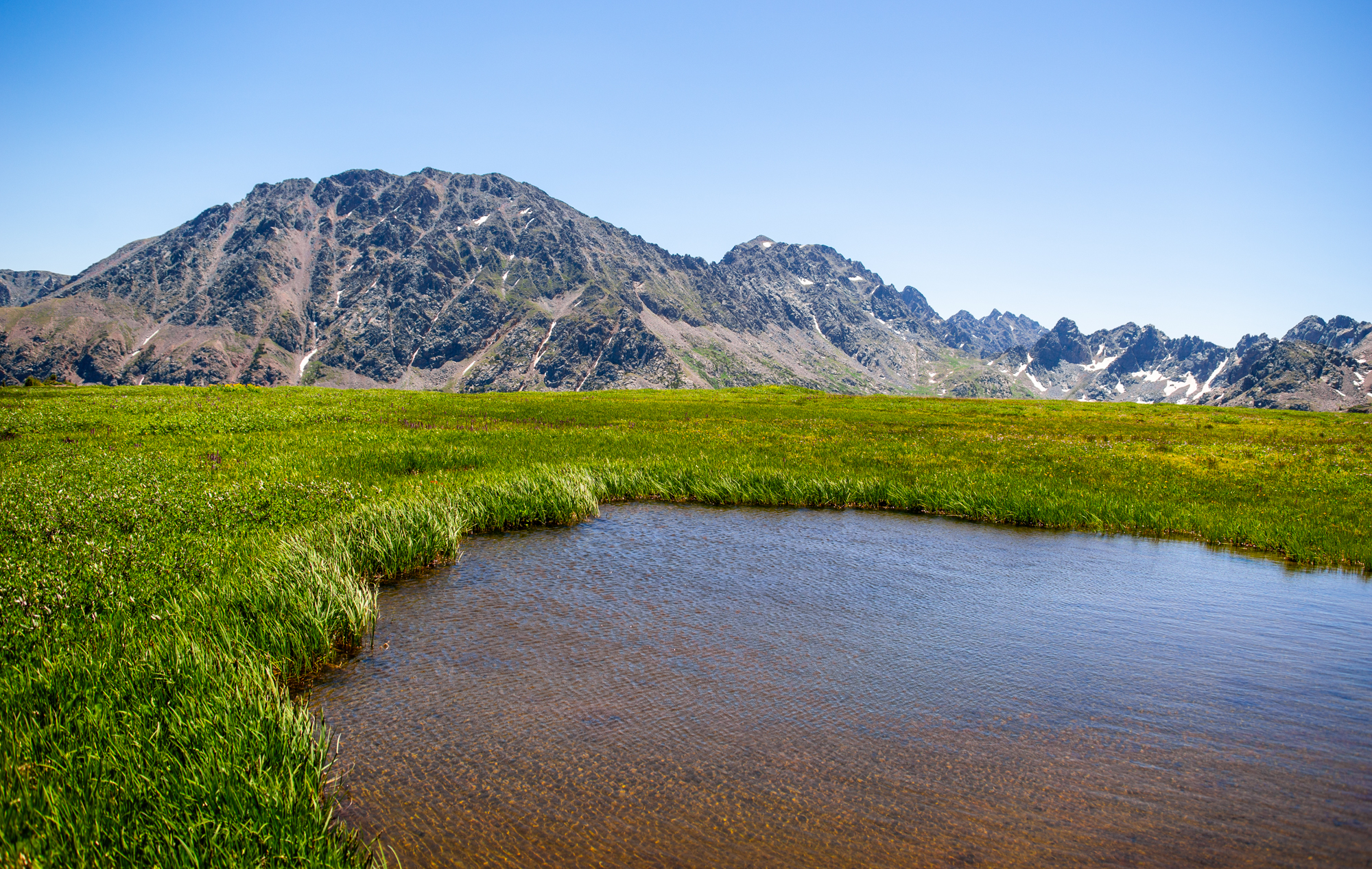
I noticed another party of hikers also heading up Meridian Peak during this detour. These were the first people I’d seen since my drive to the trailhead. I returned to the trail, descended to the saddle, and plod up the 250′ back to the undulating portion of the ridge. The rest of the way down was a blur.

I adore the alpine tundra but was excited to return back to timberline. Shade was a most welcome comfort.

I made it back to the trailhead just shy of seven hours after I had started. This is a phenomenal part of Colorado and wildflower season is the perfect time to visit.

If you are reading and feel as though I’ve let slip a secret spot… just remember we have a very small readership.
Until next time, my friends, stay adventurous!

 The Overcast Adventurers