We, The Overcast Adventurers, have an issue with planning ahead of time. It isn’t that we don’t plan ahead, it’s that we plan too far ahead. This is a major problem in Colorado, where weather can change on a dime, and was a problem for us yet again when planning this trip. The original plan – when we made it nearly a month prior – had been to hike and maybe snowshoe in the mountains near Estes Park. That was swatted down by the foul forecast for heavy snow at one week out. When this hadn’t changed at two days before the hike, we pivoted to an adventure we had been putting aside for years: The Skaguay Power Plant.
Built in 1901 as a hydroelectric power plant, Skaguay was subsequently abandoned in the 1960s after a devastating flood destroyed the dams on Beaver Creek, along with a great deal of the station’s infrastructure. The floods also destroyed the established trails along Beaver Creek, and no official trails have been built to the power plant since. This adventure would require some path-finding.


Some time ago we had attempted this hike with another friend of ours. An early turn down an incorrect route and subsequently bad conditions had forced us to turn back before reaching the journey’s ultimate goal. The first section was therefore familiar, a quick descent beyond the Skaguay Reservoir dam and down a road into the canyon.
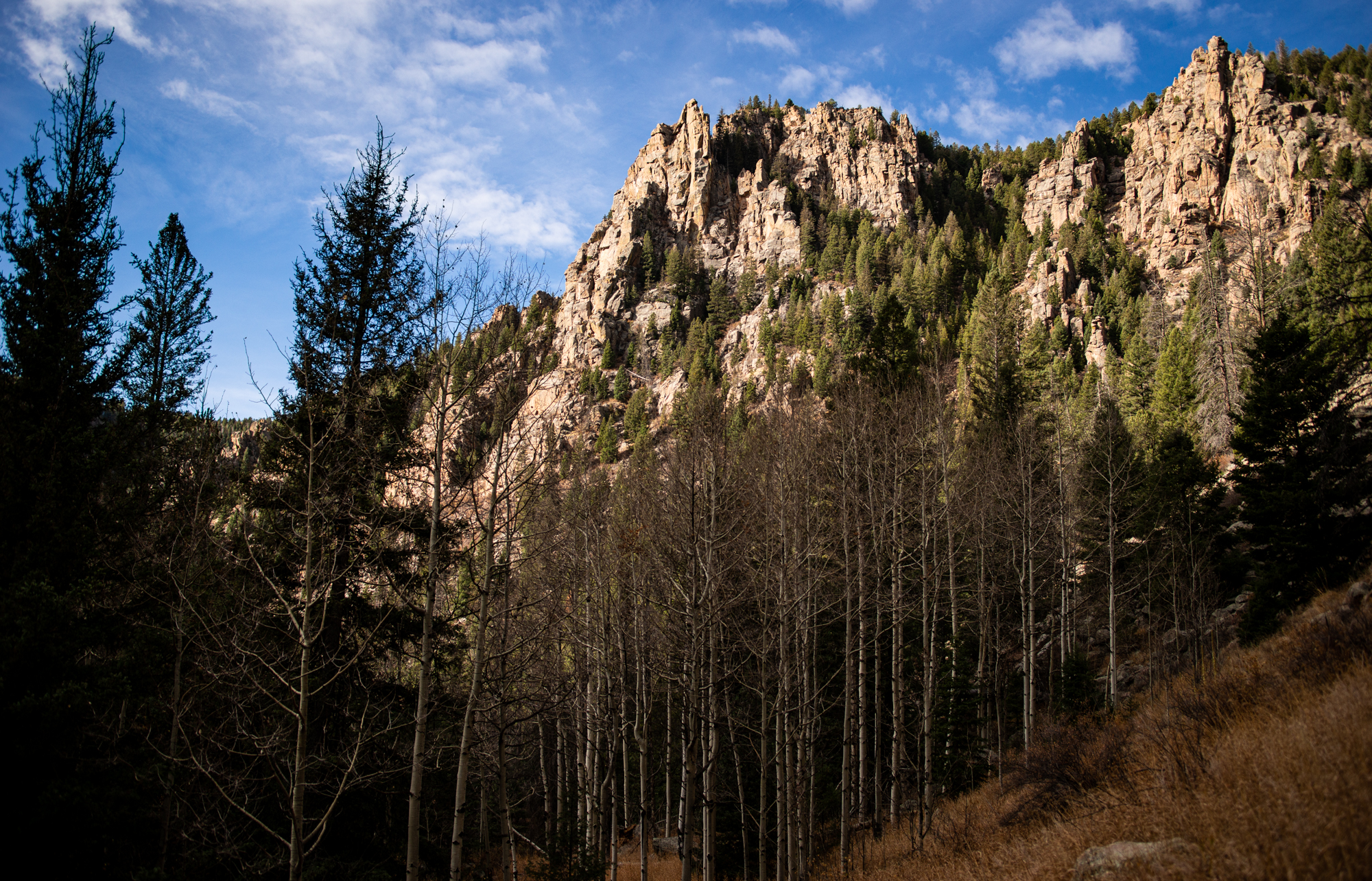
We were passed by a pair of hunters early on but otherwise were entirely alone. There weren’t even cows grazing in the meadows as the canyon opened up to mixed pine and aspen. Frost from the night before was quickly dripping away in the morning sun. Despite there being snow only a few miles to the north, we were soon removing our hats and heavy coats. It was shaping up to be a good day for a hike.


The hunters we had passed would turn out to be almost the only other life we would see that day. Besides a few squirrels and birds, the hike was otherwise devoid of wildlife. This was a bit of a disappointment since we were hiking through obviously prime habitat. There was plenty of the dense willow and grass growth that deer and moose typically love, and lots of recently felled trees from an active beaver population. We guessed that the locals must be lying low due to the hunter activity though.
Past a series of intricate beaver dams the canyon started to narrow. And deepen. The walls of the canyon were steep, often vertical slabs of stone at that point. As we hugged the edge of the creek and climbed around waterfalls, we realized it was a small wonder that any infrastructure had ever been built in this area to begin with.


Almost 60 years on there were still signs of what had once been in the canyon, and of the flood that had decimated it…
A wooden pipeline had once carried water from the upper reservoirs to the power plant. In the upper parts of the canyon the line of supports for the pipe were still visible, half-buried but aligned from reservoir on down. As we progressed we started to spot the metal support rings scattered, bent, and often sticking haphazardly from behind fallen rocks.
There had been power lines to carry electricity up the canyon. These were now strewn about, rotten, but with their cables still criss-crossing the creek and parts of the trail like tripwires.
(Having your tetanus vaccine is recommended for this hike.)

As the canyon walls became steeper and even more inaccessible, the rudimentary path we had been following (marked only occasionally with bits of ribbon or string) became less apparent. The main thing that kept us on track then were the numerous creek crossings in the final two miles before the ruins. This is not to say that the creek crossings were well-marked or apparent in any way – most of them consisted of thin, loose, slippery fallen trees that required tightrope walking skills to cross. Rather, it became apparent that we needed to cross the creek when the canyon wall that we had been following suddenly became too steep to circle around.
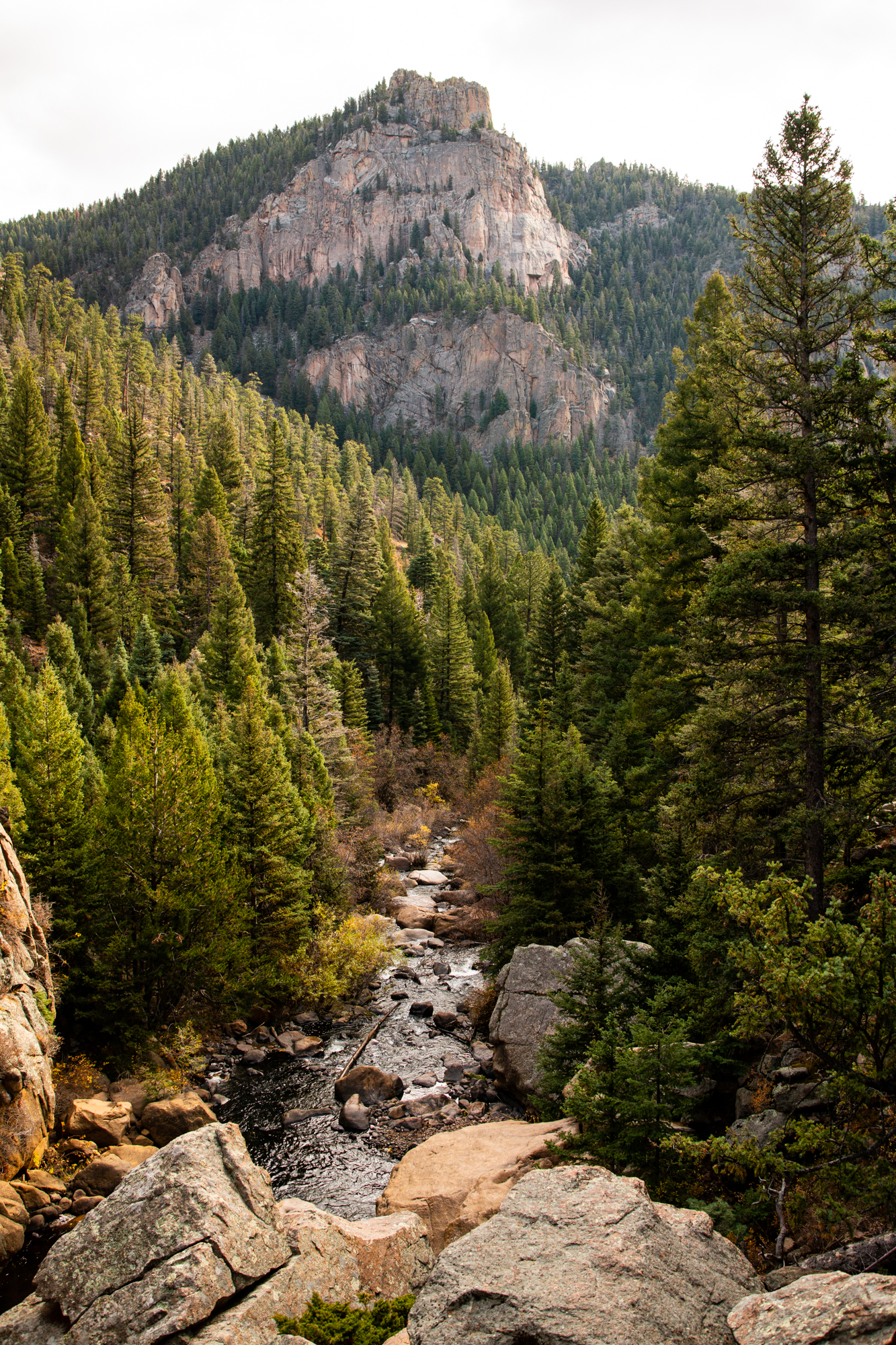
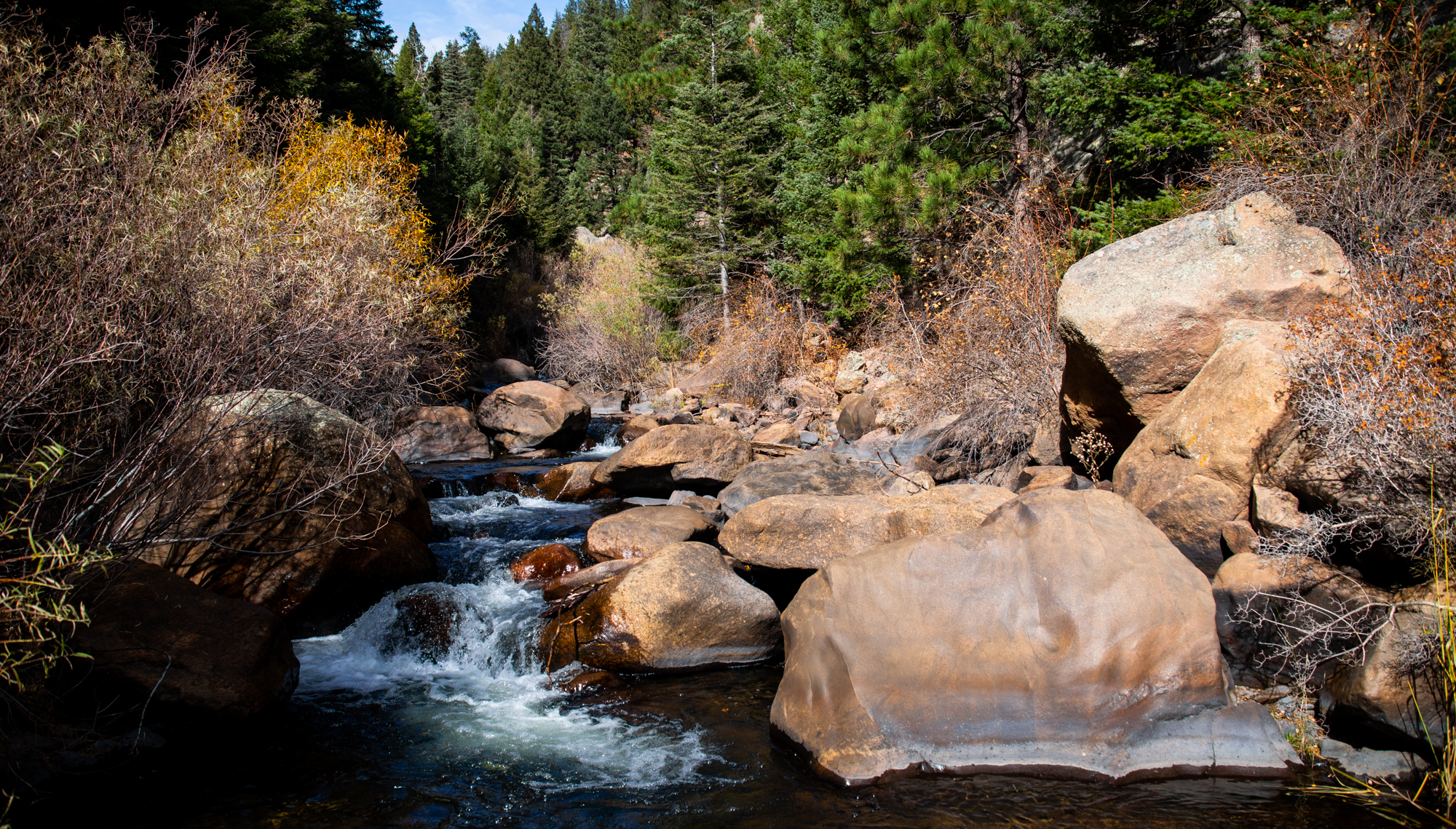

It took longer to reach the destination than we had expected. We were just starting to let the self-doubt settle in when we reached yet another creek crossing. We glanced down at an old metal pan by the water, and then up to the hillside opposite us. And there it was. Part of a peeling white-painted wall was apparent through the pines. We had made it, and we sped over the water crossing and up the hill.
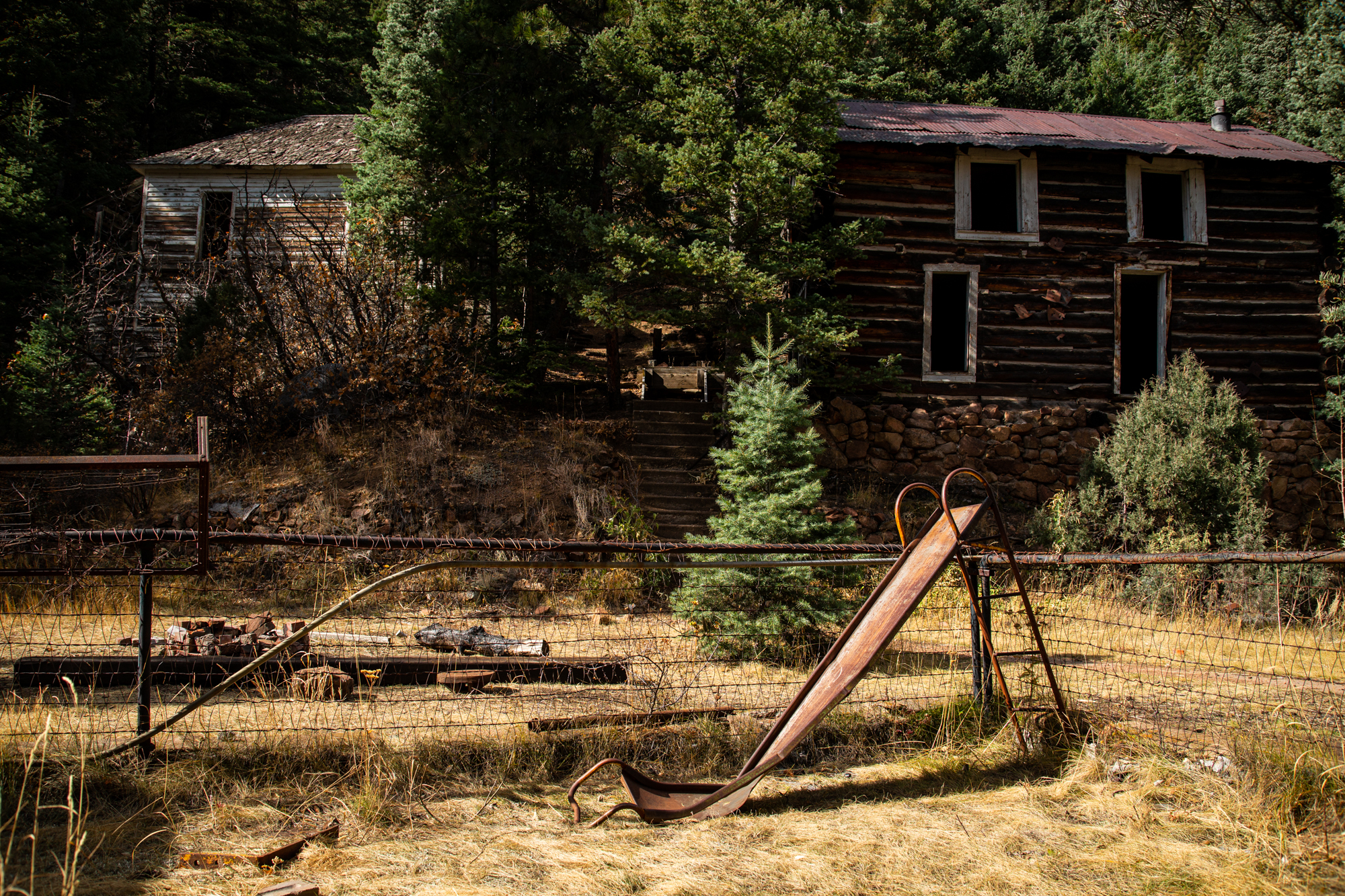
We ducked around the rusted remains of a swingset and quickly found ourselves in the courtyard of the Skaguay Power Plant. It was everything we could have hoped for in a hike on the day after Halloween.

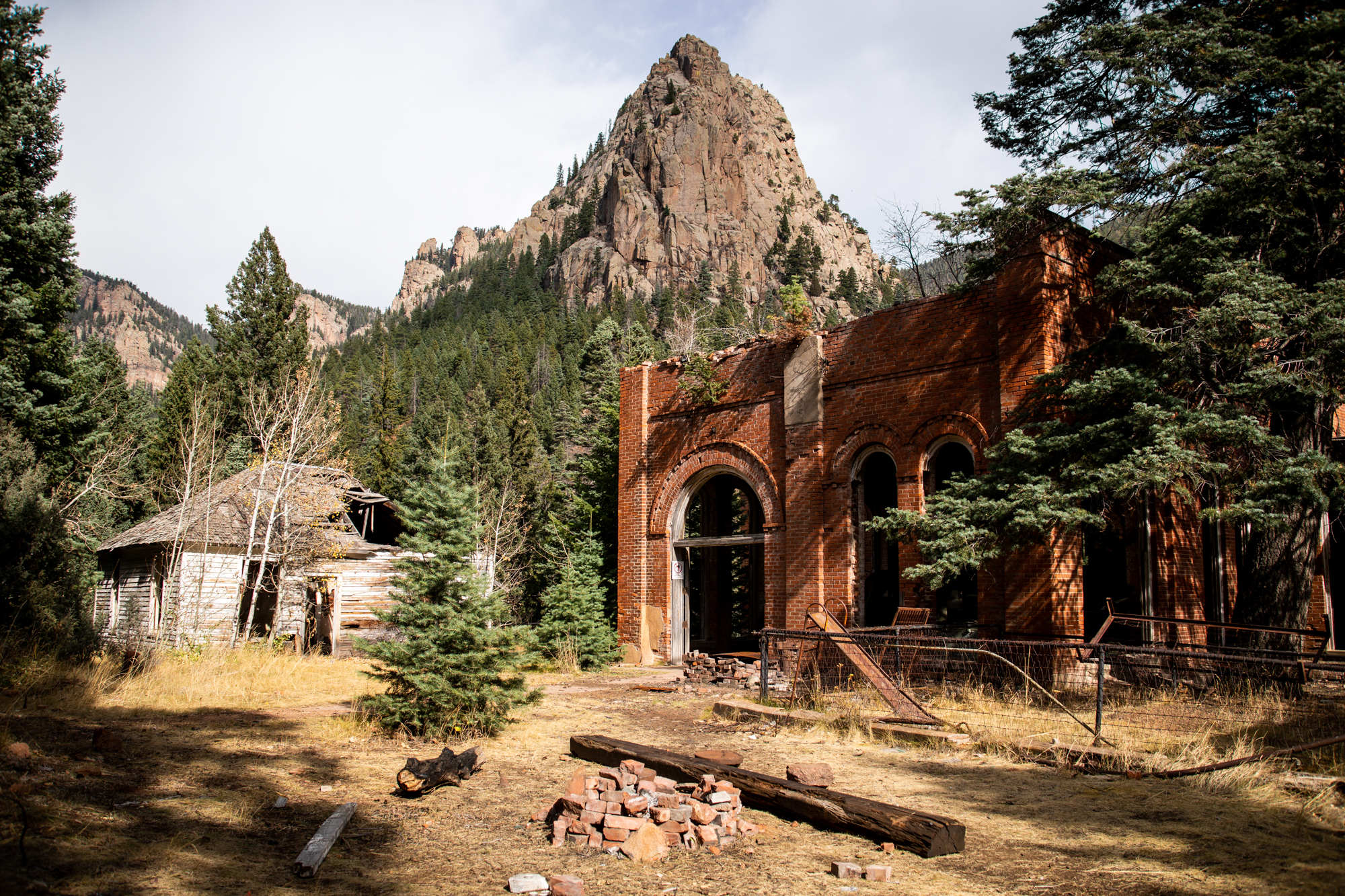
Despite the apparent isolation of Skaguay, it was only a few years post-abondonment that looters had started to pick apart the machinery that was left behind. Any personal belongings that had been left behind by the workers were probably quick to go. And anything with copper wiring in it? Forget about it. Vandals had followed to leave their mark when there was nothing left to take, and what had once been a beautiful outpost in the wilderness was left as the ruins seen in these photos.


We spent some time wandering the houses and seeing what we could. It was a nice enough day for it, probably one of the last for this season. All of the houses were in various states of collapse, with at least a couple of them looking like they would not survive the next heavy snow. The door frames on one building tilted at a noticeable angle.
After exploring for as long as we could, we decided it was time to start hiking back. We had promises to keep that we would be in contact with people by nightfall and it was going to be an all-uphill return.

We bid this little slice of Colorado history goodbye and went back to the numerous creek crossings. It was lucky that we left when we did, as the hike back turned out to be arduous in the extreme. The crossings were less obvious, and it was significantly more difficult to find the bits and pieces of trail that we had traveled in on. Dragging our feet, we finally pushed up the last bit of road over the Skaguay Reservoir dam as the sun was nearing the horizon.

Thanks for reading!
~Sky & Ty
If you’re interested at all in reading more about the history of the Skaguay Power Plant, this post has a much more detailed account, as well as links to further resources: https://www.outtherecolorado.com/adventures/hike-to-abandoned-colorado-power-plant-is-a-step-back-in-time/article_7896626e-7585-5a63-9d43-cda3b0d36ec0.html
 The Overcast Adventurers
Beautiful pictures and an interesting story! ❤️
LikeLiked by 1 person
Super cool! This hike has been on my to-do list for a while. I was hoping to see the water level quite a bit lower this time of year but it looks like the crossings could still be a little tricky.
LikeLiked by 1 person
Thanks for reading! The crossings were challenging, and I definitely recommend bringing a pair of trekking poles along if you decide to do the hike. We were lucky that neither of us fell into the water at any point.
LikeLiked by 1 person
Always so fun reading about your adventures and seeing gorgeous pictures!!
LikeLiked by 1 person